

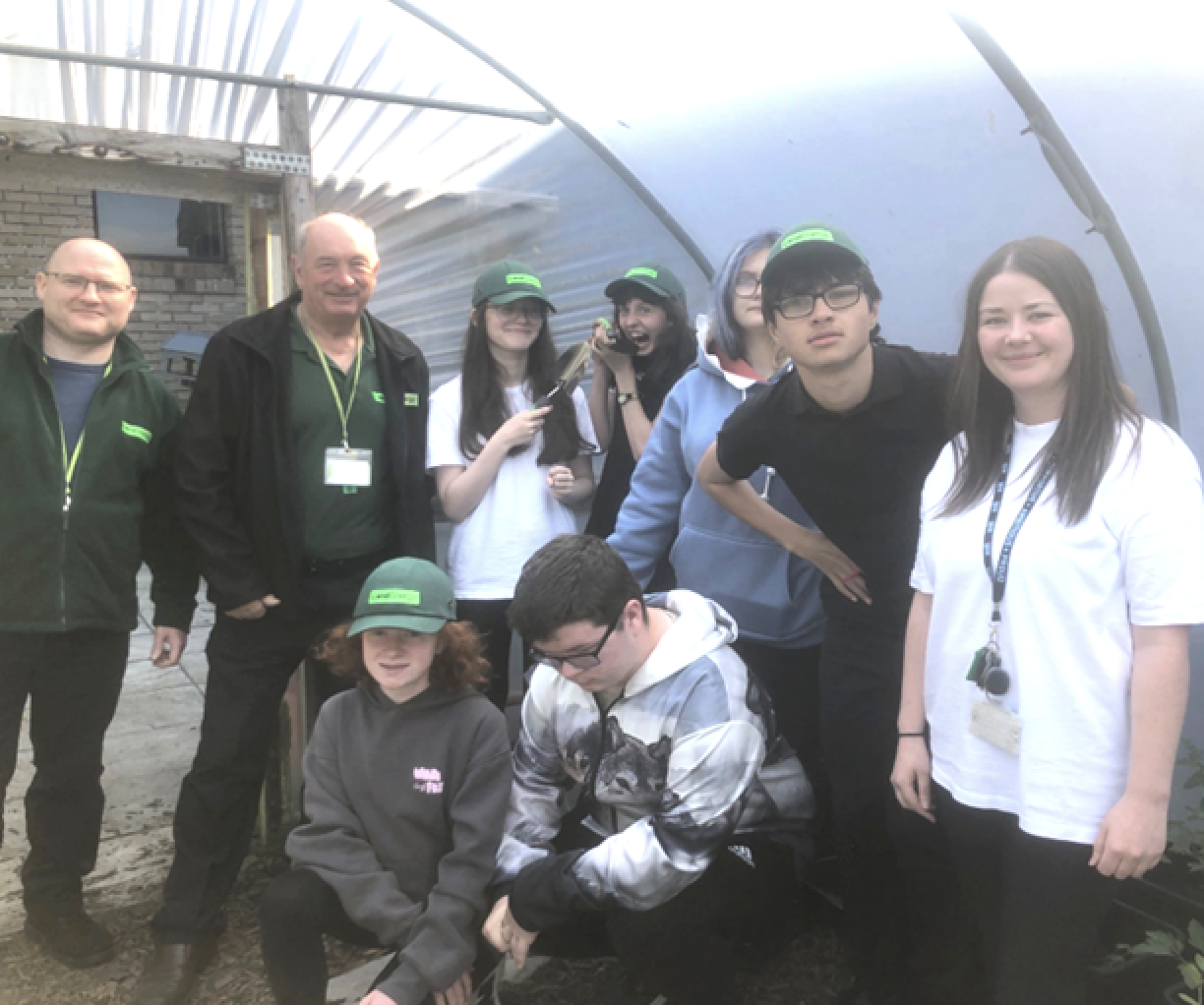
The Land Energy team paid a visit to Girvan Academy, to deliver something that could help shape the future of sustainable agriculture by supporting future growth in Girvan: regenerative soil conditioner.
The visit was part of a hopeful ongoing collaboration with the school, supporting pupils and staff in their hands-on learning about agriculture and sustainable development. The students were especially excited to test how Land Energy’s soil would perform compared to traditional peat-based soils and synthetic fertilisers. It’s all part of a real-world experiment to see what works best for growing healthy, sustainable crops.
 From Pellets to Plants
 From Pellets to Plants
Land Energy might be best known for its wood pellets and briquettes, but the company has recently branched out into regenerative soil conditioner designed to nourish the land naturally, using fungi and bacteria to enrich the soil without the need for artificial chemical-based fertilisers. It’s a big step toward more sustainable farming, and the pupils at Girvan Academy are getting a front-row seat.
A Tour Through the Tunnel
During the visit, Land Energy staff were treated to a tour of the school’s polytunnel, where a variety of edible plants and herbs were thriving – despite the unseasonably warm weather including potatoes, carrots, and tomatoes.
“It was fantastic to spend time with the pupils and staff at Girvan Academy,” said David Bone, Marketing Representative at Land Energy. “Seeing their passion for growing food and learning about sustainable practices really resonated with us. We hope this donation helps spark even more curiosity about how we can grow food, care for the land, and help the environment. We’re excited to be building these kinds of connections in the community.”
Looking Ahead
This visit follows an earlier trip where Girvan Academy pupils toured the Land Energy facility to see sustainability in action. And it’s just the beginning. Land Energy is keen to deepen its partnership with the school and expand its outreach to other schools across South Ayrshire.